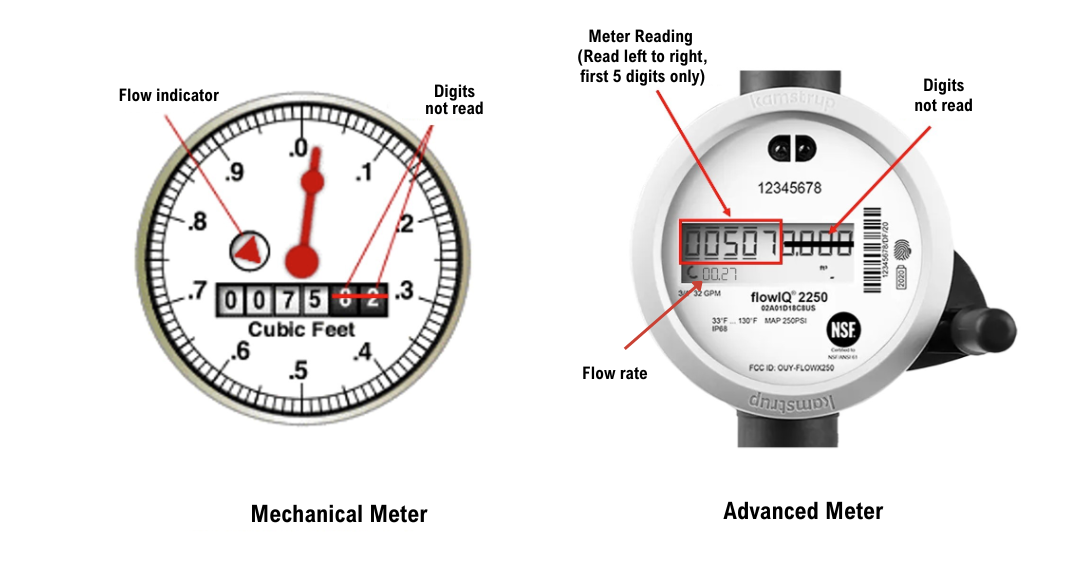
A water meter measures the volume of water delivered to a property in cubic feet. One hundred cubic foot (CCF) equals about 748 gallons.
Most residential water meters are located near the curb or sidewalk at the front of the property. It is likely in a direct line from the main outside faucet of your home.
El Paso Water is replacing mechanical meters with advanced meters across our community to help serve you better.
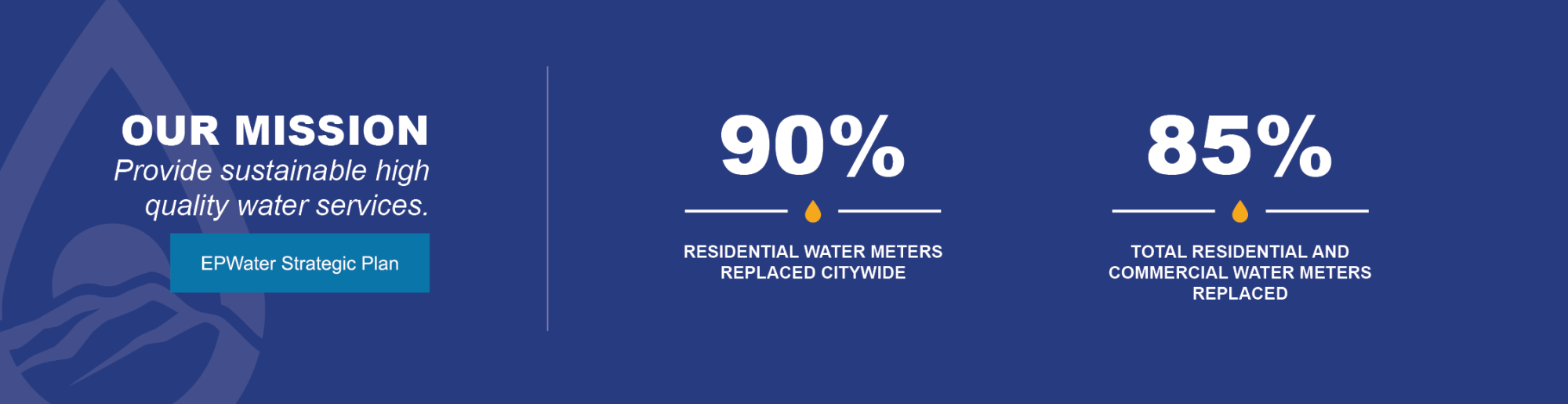
So far, approximately 92% of residential water meters have been replaced, representing significant progress in modernizing our system. Overall, about 85% of all meters have been replaced citywide. Residential meter upgrades are expected to be completed by summer 2027. Some customers may notice a small increase in their bill once the new, more precise meter is installed.
These new advanced meters send data securely and automatically and offer several improvements over older meters.
- Faster leak detection reduces water waste
- Improved efficiency reduces manual readings and human error
- More accurate billing ensures you’re charged correctly for the water you use
- Increased 50-year lifespan for equipment in contrast to 10-year lifespan of mechanical meters
How to Read Your Water Meter
Mechanical Meter: Because El Paso Water bills in hundred cubic foot (CCF) increments, we only read up to the thousand foot dial. This number increases by one every time a hundred cubic feet of water passes through the meter.
The small red triangular dial near the center of the register is a flow or leak indicator, and it will turn counterclockwise when even the slightest amount of water flows through.
Advanced Meter: Most advanced meters display current usage on a digital screen. The screen cycles through readings showing total consumption and flow rates. Because El Paso Water bills in hundred cubic foot (CCF) increments, we only read up to the thousand foot dial.
Click here to view the advanced meter display codes in English.
Haga clic aqui para ver los códigos de visualización del medidor avanzado en Español.
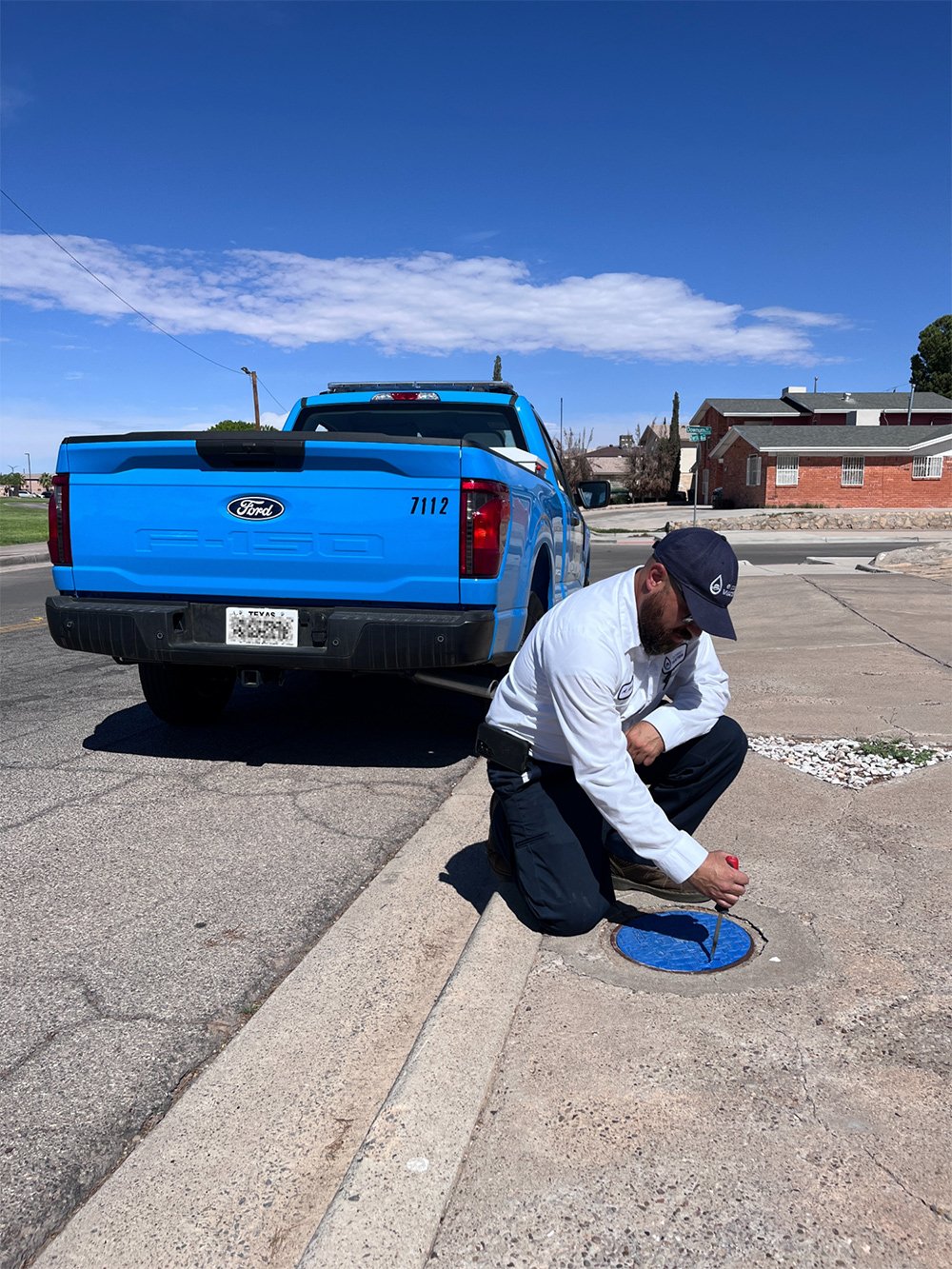
Mechanical Meter: Use a long screwdriver to lift and remove the metal lid. However, be cautious as insects, reptiles or other small animals occasionally take residence inside the boxes.
Advanced Meter: There are several ways to open the new blue lid, watch the video to learn how.
Advanced Water Meter FAQs
Advanced Metering Infrastructure (AMI) enables water meters to automatically and securely transmit usage data through a radio signal to the utility. It records hourly consumption and sends daily updates.
EPWater is upgrading to advanced meters to improve billing accuracy, detect leaks faster, enhance customer service, and reduce operational costs. Many existing meters are nearing the end of their service life and may not measure water flow as precisely.
No – All customer meters will be upgraded to advanced meters.
Yes, but only briefly. The installation typically takes 30–60 minutes, during which your water service may be turned off temporarily. You do not need to be home during this time.
If you notice leaks or water pressure issues, or have more questions or concerns, contact EPWater’s customer support team at 915-594-5500 or [email protected]
Your bill may change depending on your actual usage. Advanced meters are more accurate than older meters, which may have underreported consumption over time. Historically, when the utility has changed out old meters for advanced meters, there has been an accuracy adjustment.
Yes. Advanced meters use secure, closed-loop networks that transmit data only between the meter and utility servers. They are not connected to the open internet or consumer devices. Advanced meters use data encryption and secure communication protocols to ensure privacy and protection against unauthorized access.
Yes. Advanced meters emit low-power radio frequency signals well below limits set by the FCC. They are safe for people with pacemakers and other medical devices, based on evaluations by manufacturers and health authorities.
No, we are following a schedule with our contractor. If you notice neighboring properties getting a replacement before yours, please understand that it's not uncommon for the contractor to skip a property and come back to it due to various issues.
You will receive a notification in the form of a door hanger prior to the installation of the new meter.